Product

General Data

Endmill

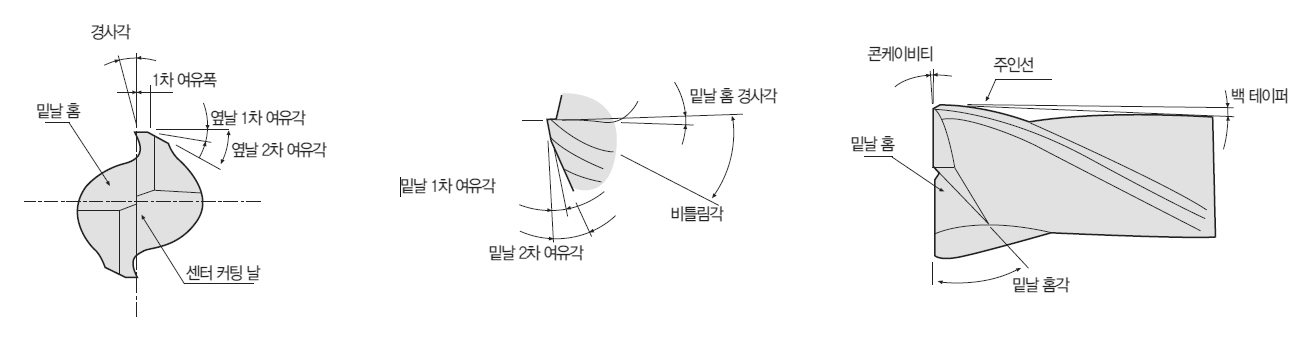
Endmill’s concept

Endmill’s concept
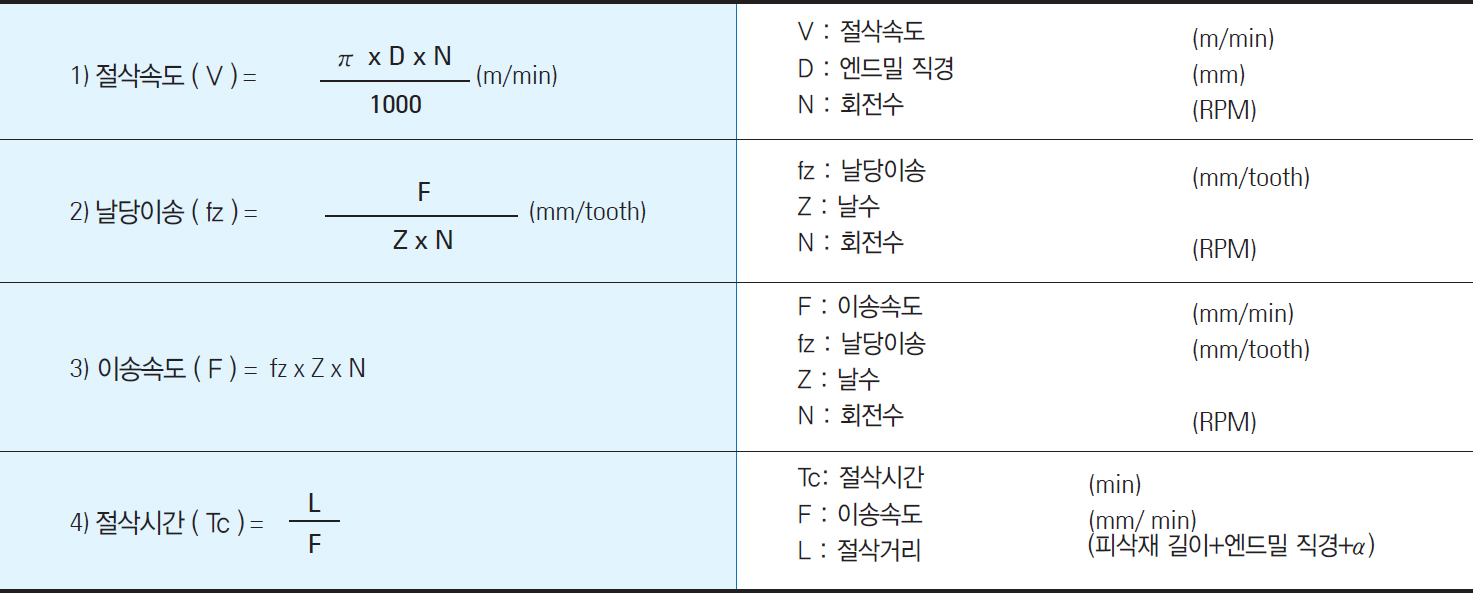
Cutting speed calculation

Cutting speed calculation
Endmill Regrinding

Regrinding timing
Range of application Endmill Dia Abrasion loss
Finish machining ~ ø10
ø 11 ~ ø30
ø 31 ~ ø50
0.05 ~ 0.1
0.1 ~ 0.25
0.2 ~ 0.35
Roughing machining ~ ø10
ø 11 ~ ø30
ø 31 ~ ø50
0.08 ~ 0.15
0.15 ~ 0.35
0.3 ~ 0.45
Way to regrinding
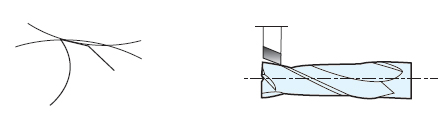
01Concave type
Demand to close Dia tolerance
Favorable machinability
Need to 2nd rake Clearance angle
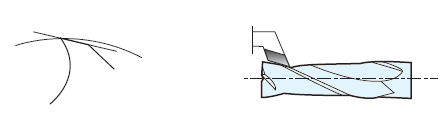
02Concave type
Favorable machinability
Need to 2nd rake Clearance angle
03Eccentric Type
Favorable Flute Diameter
Excellent Surface Roughness on workpiece
Not necessary for secondary clearance on rake
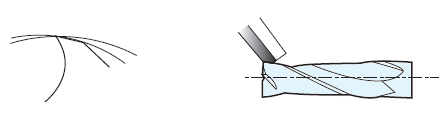
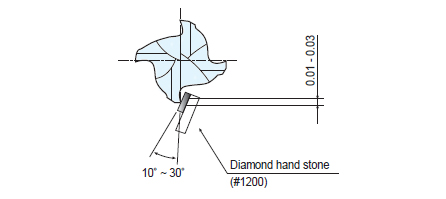
Honing
Honing
Recommended for machining mold steel or high hardness workpiece.
When machining without honing, process it for 10 to 30 seconds with an slotting of 0.01mm or less before entering the normal speed.
Endmill trouble shooting

Endmill trouble shooting
Troble issue Cause Solution
Broken
  • Excessive feed speed be more than necessary
  • Excessive Depth of cut bemore than necessary
  • Excessive protrusion
  • graved flute wear
  • Excessive flue length be more than necessary
  • Reduce feed speed.
  • Reduce Depth of cut
  • Reduce protrusion
  • Regrinding
  • Reduce flute length to the maximum
Wear and burr
  • Excessive cutting speed
  • shortage of rake angle
  • high hardness for workpiece
  • Reduce cutting speed with supply with cutting oil.
  • Modify for rake angle properly
  • Supply with cutting oil and surface treatment below one by one
Vibration during cutting
  • Unsuitable cutting condition
  • Shortage of hardness for machine and chuck
  • Poor fixed for workpiece.
  • Excessive protrusion.
  • Excessive 1st Clearance angle.
  • Modify for cutting speed and feed rate.
  • Change to machine or chuck.
  • Fixed for workpiece solidly.
  • Reduce for cutting length and protrusion length to the maximum.
  • Reduce 1st Clearance angle.
Defection for flute
  • Excessive feed speed be more than necessary
  • Shortage of rake angle.
  • Occur to vibration.
  • Poor fixed for workpiece.
  • Excessive Depth of cut be more than necessary.
  • Excessive protrusion.
  • Shortage of hardness for machine.
  • Reduce feed speed.
  • Modify the angle properly.
  • Reduce the RPM.
  • Fixed for workpiece solidly.
  • Reduce Depth of cut.
  • Reduce protrusion.
  • Change to machine and work.
Bad cutting performance
  • Cutting edge wear.
  • Improper endmill for workpiece.
  • Shortage of rake angle.
  • Regrinding
  • Change to endmill properly
  • Modify for rake angle
Poor chip emission
  • Shortage for spray pressure or lack of oil level.
  • Small chip pocket.
  • Cutting flute wear
  • Excessive Depth of cut be more than necessary.
  • Increase flow rate and pressure.
  • Use to small flute endmill or reduce feed speed.
  • Regrinding.
  • Reduce Depth of cut.
Burr on the surfacce
  • Excessive feed speed be more than necessary
  • Be slow cutting speed
  • Cutting flute wear.
  • Excessive Depth of cut be more than necessary.
  • Reduce feed speed
  • Modify for cutting speed rapidly.
  • Regrinding.
  • Reduce Depth of cut.
Shape faulty
  • Durability fault for machine and chuck.
  • Hardness fault for machine.
  • Over flute length.
  • Lack the number of flute.
  • Repair to machine and chuck.
  • Change to machine and chuck.
  • Modify for flute length properly.
  • Change to endmill with a lot of flute.
Built up edge
  • Lack of affinity between workpiece and tool and shortage of cutting oil
  • Spray to oil below one by one dry > water solubility > non-water-soluble.
  • Active non-water-soluble coolant is suitable when cutting alloy steels.